How to choose a criminal defense attorney in Sacramento.
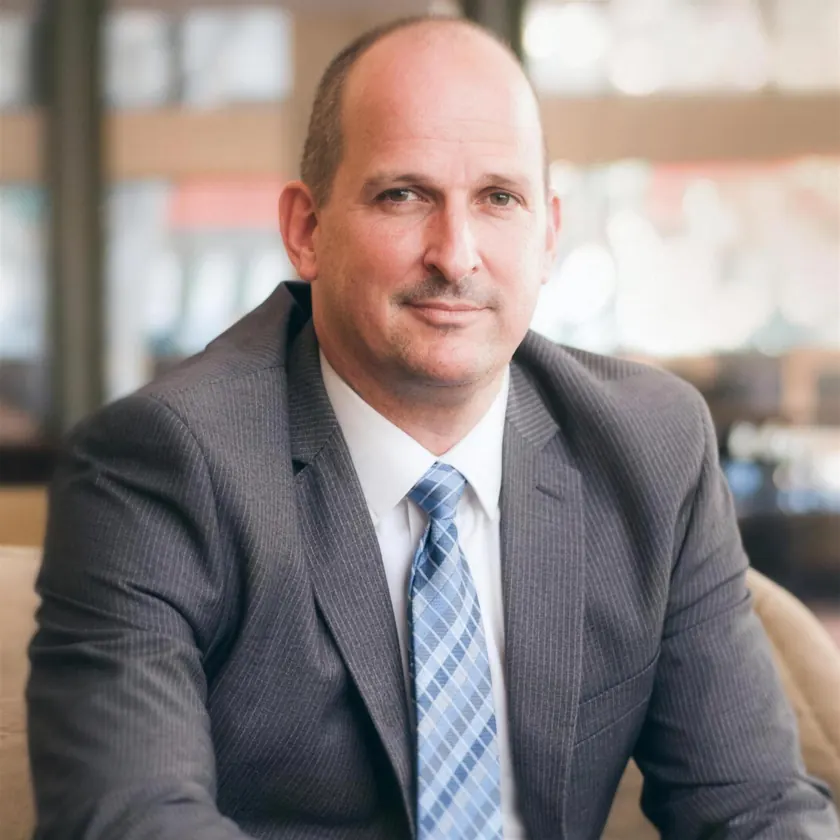
If you are looking for a criminal defense attorney in Sacramento, start with the question that matters most: who will actually be handling your case? I am Chris Parkhurst, Esq. I have been defending cases in Sacramento County since 1999, and my State Bar number is 203402. You work with us directly rather than with an intake team or a call center.
What that means in practice is straightforward. I read your file before I tell you what I think of it, I explain what it actually supports, and I give you the realistic range of outcomes rather than the encouraging end of it. For the detail on the charge itself, see criminal defense. To find out what happens next in your case, call.
Six questions worth asking before you hire anyone.
Most people hiring a criminal defence lawyer are doing it for the first time, under time pressure, and with no way to tell one website from another. These are the six questions worth asking, including of me.
Will the attorney I am talking to be the attorney in court?
At a lot of firms the person who takes your call is not the person who appears. Ask directly. With me the answer is that your case stays with me from the first call to the last court date. The firm's attorneys work as a team, and any of them may handle your case. You can read about them below.
How much of this practice is actually criminal defence?
A firm that does personal injury, family law and some criminal work is not the same as one that does this. Ask what proportion of the caseload is criminal, and what proportion of that is in this county.
Do they know this courthouse?
Not the judges personally, which is not the point and not a thing to sell. How the calendar runs, how this District Attorney's office approaches a filing like yours, what is realistically available here rather than in general.
What is the fee, and what does it cover?
Ask what is included and what is not: does it cover a preliminary hearing, a motion, a DMV hearing, a trial. Get it in writing. A number without a scope is not a quote.
What are the realistic outcomes, including the bad ones?
Anyone who tells you they can guarantee a result is telling you something they cannot know. What you want is someone who will describe the range, tell you where your file probably sits in it, and say plainly when the answer is not the one you wanted.
What happens in the next two weeks?
A good answer is specific: what gets requested, what deadline is running, when the next date is. A vague answer here usually means nothing is going to happen for a while.
Cases I take in Sacramento.
I defend the full range of criminal charges arising in Sacramento County:
- DUI and driving offences. The most commonly filed charge in the county, and the only one that starts a second case at the DMV the same day.
- Violent crime and assault. Assault, battery and the charges that count as strikes. Several require no injury at all.
- Domestic violence. Where the person who called cannot end the case, because the District Attorney decides.
- Theft and property offences. Almost all of them wobblers, where felony or misdemeanour is the real question.
- Drug offences. Frequently eligible for diversion, which is lost by delay more often than refused.
- Weapons and firearm charges. California regulates the possession itself, which catches people who broke no other law.
- Sex offences. Where registration attaches to the conviction rather than the sentence.
- Record relief and expungement. Dismissal, reduction and sealing, once a case is behind you.
If your charge is not listed, call me. Charging documents are written for the court rather than for the person holding them, and working out what you are actually facing is the first useful thing that happens.
What I am actually doing for you.
The work in a criminal case is mostly unglamorous and mostly happens before anyone stands up in court. Requesting the reports and the footage before retention periods run. Reading them against each other. Establishing which agency holds what. Working out whether each count is supported or whether it was filed at the top of a range. Finding out early whether diversion or a reduction is genuinely available, because eligibility is lost by waiting more often than it is refused.
Where cases come apart
Criminal cases are not usually won on a single dramatic point. They come apart in specific places, and those places are the same ones again and again:
- The stop. Whether there was a lawful reason for it, and whether the detention went beyond that reason.
- The search. Whether consent was genuinely voluntary, whether a warrant was supported, whether the scope was exceeded.
- The gap between the report and the recording. Reports are written afterwards, from memory, by someone with a view. Footage is not.
- The elements. Whether each count charged is actually supported, or whether it was filed at the top of a range and never tested.
- The enhancement. Charged separately, proved separately, and frequently attached more readily than it can be established.
- Timing. Evidence that existed in week one and does not exist in week twelve.
None of that happens on its own. It happens because somebody went looking, early.
A little about me.
I have been licensed to practise in California since 1999, State Bar number 203402. I defend criminal cases across ten Northern California counties, from offices at 701 E Street in Sacramento and 970 Reserve Dr. #116 in Roseville, and Sacramento County is where most of that work is.
I am not going to tell you how many cases I have handled or describe a track record, because those numbers are unverifiable from where you are sitting and every firm claims them. What I will tell you is that an attorney will read your file before telling you what they think of it, and that I will give you the realistic range rather than the encouraging end of it.
My Sacramento office is in the downtown court district, a few minutes from the courthouse, the District Attorney's office and the Main Jail. See Sacramento for directions and what to bring.
You are scared. That is normal.
Almost everyone who calls me is frightened, and most of them apologise for it. There is nothing to apologise for. Being arrested is designed to be frightening and the process afterwards is deliberately opaque.
What usually helps first is not reassurance but information: what you have actually been charged with, which is often not what you were told at the scene; what the range of outcomes genuinely is; what happens at the next date and whether you have to be there. Most of the fear in the first week is fear of the unknown, and a good deal of that is fixable in one conversation.
What I will not do is tell you it will be fine. I do not know that yet, and neither does anyone else who has not read your file.
Courts serving Sacramento.
A criminal case arising in Sacramento is prosecuted by the Sacramento County District Attorney in the Superior Court of California, County of Sacramento. Which courthouse hears it depends on the matter, and the date and location on your citation or release paperwork is the authority rather than anything on this page.
Gordon D. Schaber Sacramento County Courthouse
- Address. 720 9th St, Sacramento, CA 95814
- Telephone. (916) 874-5522
- What it handles. The main criminal courthouse for Sacramento County, and where most felony matters are heard.
- Note. Downtown, a short walk from the District Attorney's office and from my office on E Street.
Carol Miller Justice Center
- Address. 301 Bicentennial Cir, Sacramento, CA 95826
- Telephone. (916) 875-7746
- What it handles. Traffic and a share of the misdemeanour calendar, which is where a number of first-offence DUI matters are handled.
- Note. Out toward the county's eastern side rather than downtown, so check your paperwork before you drive anywhere.
Sacramento County District Attorney
- Address. 901 G St, Sacramento, CA 95814
- Telephone. (916) 874-6218
- Role. The office that decides what is filed, and it makes that decision after the arrest rather than during it.
For how this office charges cases and what happens between arrest and arraignment, see Sacramento County.
Law enforcement agencies in Sacramento.
Which agency arrested you is worth establishing on the first call, because it determines what records exist and how quickly they have to be requested.
Sacramento Police Department
- Address. 5770 Freeport Blvd #200, Sacramento, CA 95822
- Contact. (916) 808-5471
- Jurisdiction. The city of Sacramento itself. Most surface-street DUI stops inside the city limits are theirs.
California Highway Patrol
- Address. Multiple area offices serving the region
- Contact. (916) 861-1300
- Jurisdiction. Interstate 5, Highway 50, Interstate 80 and Highway 99. Four major routes meet in or beside the city, so the CHP writes a large share of Sacramento DUI reports.
Sacramento County Sheriff's Office
- Address. 4500 Orange Grove Ave, Sacramento, CA 95841
- Contact. (916) 874-5115
- Jurisdiction. The unincorporated county surrounding the city, and the Main Jail where people arrested in Sacramento are booked.
Also operating in the city:
- Sacramento Regional Transit police — the light rail system and its stations.
- Sacramento State University Police — the campus and the surrounding streets.
- UC Davis Medical Center police — the medical centre campus in Oak Park.
- California State Police / CHP Capitol Protection — the Capitol grounds and state facilities.
More on the agencies making arrests across the city is on the Sacramento page.
About Sacramento.
Quick facts
| Population | About 525,000 |
|---|---|
| County | Sacramento County — and the county seat |
| Area | About 100 square miles |
| Incorporated | 1849 |
| Median household income | About $77,000 |
| Major industries | State government, healthcare, education, agriculture and food, and a growing technology sector |
Population, area and income figures are approximate and drawn from US Census Bureau data, rounded deliberately because precise figures on a page like this go stale without anyone noticing.
Sacramento overview
Sacramento is California's capital and the seat of Sacramento County, so the county's entire criminal machinery is concentrated here: the courts, the District Attorney's office and the Main Jail, all within a short distance of each other downtown.
It is also a city with a great deal of unincorporated county inside what looks like the city. Arden-Arcade, Carmichael and other communities are policed by the Sheriff rather than by Sacramento Police, and nothing on the ground tells you which side of the line you are on. That matters, because it decides whose report your case is built on.
Four major routes meet in or beside the city, which means the California Highway Patrol writes a large share of the reports in cases arising from traffic stops.
Notable landmarks and areas in Sacramento.
These are the areas that come up most often in the cases I handle:
- The State Capitol and Capitol Park. The centre of state government, and the reason downtown fills and empties on a weekday rhythm that shapes evening traffic.
- Old Sacramento Waterfront. The historic district on the river, with a concentration of licensed premises and a steady weekend pattern.
- Midtown and the K Street corridor. The main bar and restaurant district, and the origin of a large share of the city's late-night DUI stops.
- Golden 1 Center. Event nights change downtown traffic considerably, and enforcement downtown reflects that.
- Sutter's Fort. The original settlement, in the middle of what is now Midtown.
- Sacramento State University. Its own campus police force, and a student population concentrated along the J Street corridor.
- Land Park and William Land Park. Residential south of downtown, policed by Sacramento Police.
- Natomas. North of the river, with Interstate 5 and Interstate 80 running through it.
- Arden-Arcade. Unincorporated rather than city, so the Sheriff responds there rather than Sacramento Police, and the boundary is not obvious on the ground.
Serving Sacramento County communities.
Besides Sacramento, I represent clients across the county and the eight counties around it:
Elk Grove Folsom Citrus Heights Rancho Cordova Galt Carmichael Antelope West Sacramento Davis Roseville Rocklin Woodland Amador County
Questions I get every week.
What is the difference between being arrested and being charged in Sacramento?
An arrest is made by police. A charge is filed afterwards by the Sacramento County District Attorney, who reviews the report and decides independently what to file, whether as a misdemeanour or a felony, and whether to file at all. People are released without charges regularly. That period in between is the one point where the prosecution has not committed to a position. See Sacramento County.
Which courthouse will my Sacramento case be heard in?
It depends on the matter. The Gordon D. Schaber courthouse at 720 9th Street is the main criminal courthouse and hears most felony matters; the Carol Miller Justice Center on Bicentennial Circle handles traffic and part of the misdemeanour calendar. Your paperwork carries the date and location, and that is the authority.
Do I need a lawyer before my first court date?
The first appearance is the arraignment, where charges are read and a plea entered. By then the filing decision is already made. Anything that could have influenced what was filed had to happen before it, which is why the call is more useful early than on the morning of court.
Does it matter which agency arrested me?
Yes. Sacramento Police, the Sacramento County Sheriff and the CHP all operate here, and the unincorporated communities inside the metropolitan area are Sheriff rather than city police. They keep records on different systems and retain footage on different schedules, which changes what I request and how quickly. See Sacramento.
What is a wobbler, and why does everyone keep saying it?
An offence that can be filed as either a felony or a misdemeanour. A great many California offences are wobblers, including most theft and many assaults. Which way it is filed, and whether a felony can later be reduced under Penal Code 17(b), affects firearm rights, employment and immigration far more than the sentence usually does. See theft and property crimes.
Can my case be resolved without a conviction?
Sometimes. Diversion, deferred entry of judgment and dismissal all exist, and eligibility is narrow and specific rather than general. It depends on the charge, the record and how this county handles it. Worth checking immediately, because eligibility is more often lost by waiting than refused. See drug crimes, where it comes up most.
Should I just use the public defender?
Public defenders are experienced criminal lawyers and appointment depends on financial eligibility. The practical differences are caseload and continuity rather than skill. There is a longer answer in public defender versus private attorney. If you qualify and cannot afford counsel, use it — that is what it is for.
What does a Sacramento criminal defence lawyer cost?
It depends on the charge, whether it is a misdemeanour or a felony, and whether the case is likely to resolve or be tried. Call and I will tell you what representation in your situation would cost before you commit to anything. For the general picture, see what a criminal defence lawyer costs in California.
Last updated